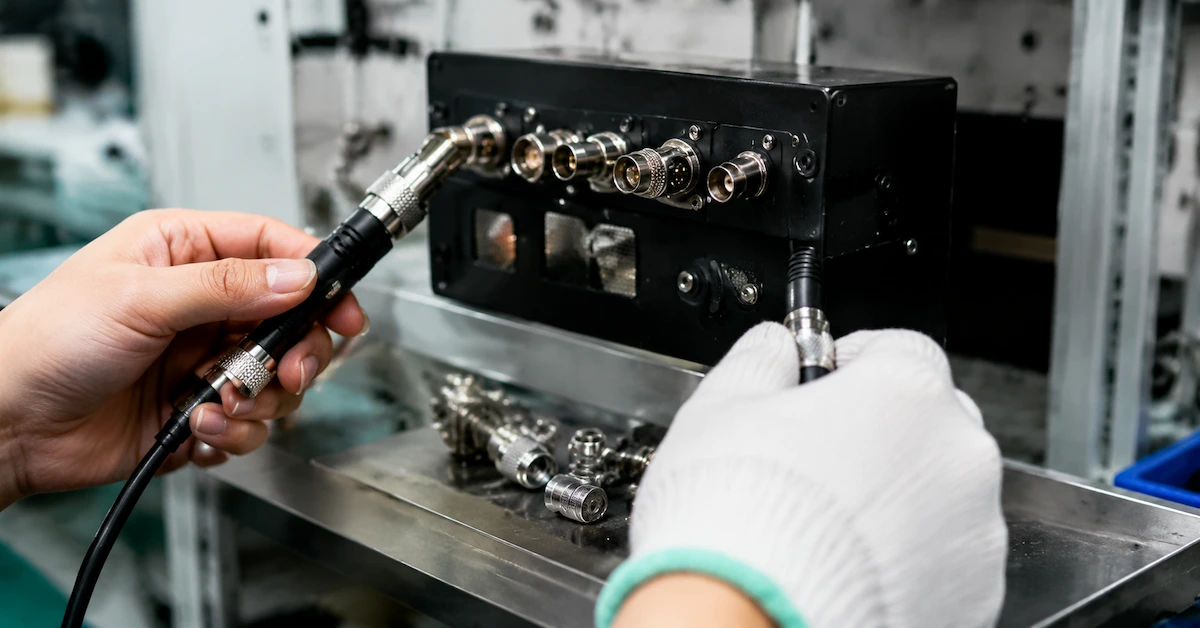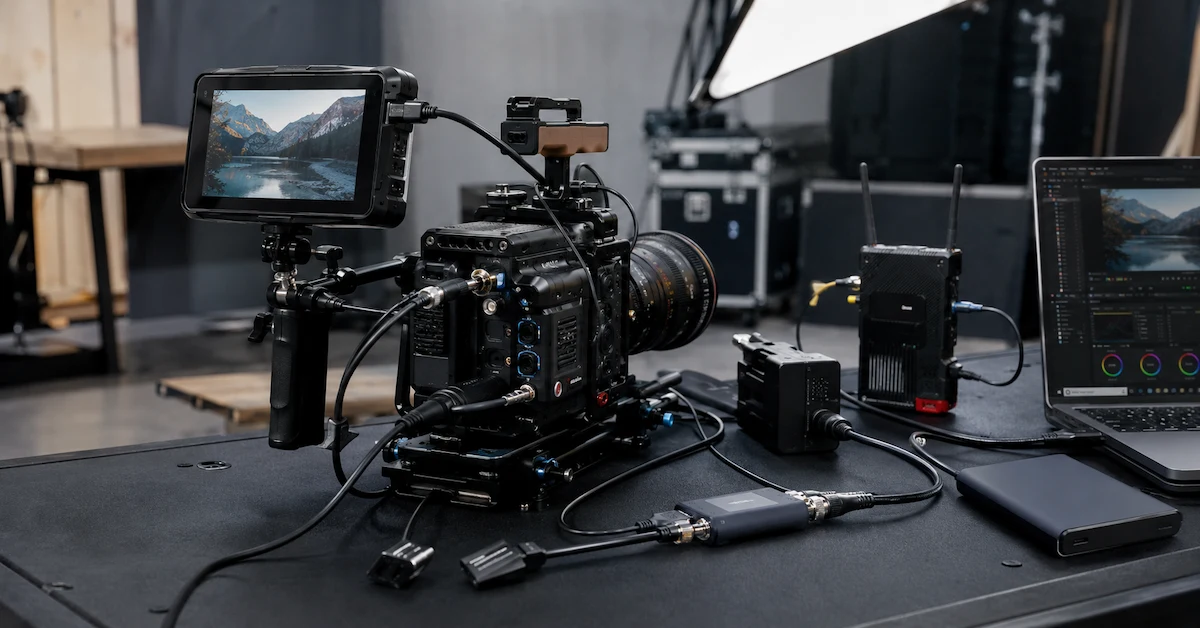
A reliable power cable manufacturer is important for professional camera and AV workflows where stable power delivery directly affects production reliability. Cameras, monitors, wireless transmitters, recorders, EVFs, focus systems, and other accessories often depend on external batteries or power distribution systems. If the cable fails, the whole setup may stop working.
For B2B buyers, a power cable is not just a simple accessory. It must match the device, connector type, current requirement, cable length, routing path, and working environment. A low-quality cable can cause power interruption, loose connection, overheating risk, damaged ports, or production delays.
Alvin’s Cables provides professional cable solutions for photography, film, broadcast, studio, AV, and industrial applications, including standard and custom power cable options for demanding equipment workflows.
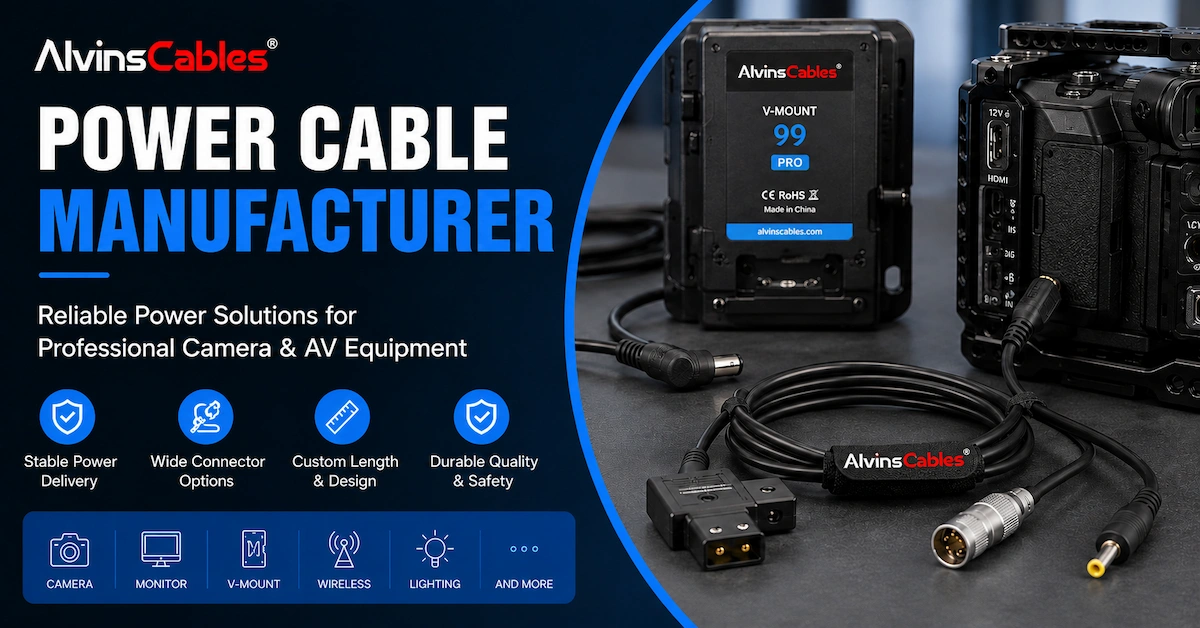
Quick Answer: What Should You Look for in a Power Cable Manufacturer?
A good power cable manufacturer should provide stable power transmission, accurate connector compatibility, suitable current rating, durable cable structure, reinforced strain relief, and custom cable options for different professional devices.
Buyers should check whether the manufacturer can support:
- D-Tap power cables
- Camera power cables
- Monitor power cables
- Dummy battery power cables
- DC power cables
- Power cables for wireless transmitters
- Custom length power cables
- Right-angle connector options
- Low-volume prototype and bulk order support
A strong manufacturer should help buyers match the cable to the actual equipment setup, not only the connector name.
Why Power Cable Quality Matters
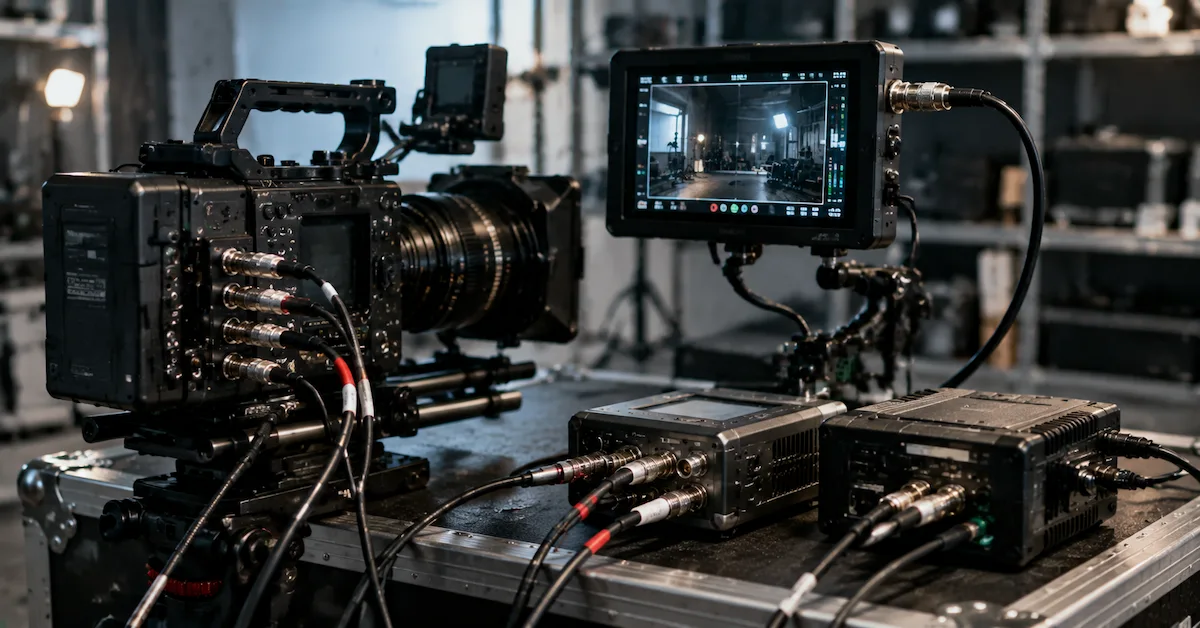
Professional camera systems are often powered by V-mount batteries, Gold-mount batteries, D-Tap outputs, DC connectors, dummy batteries, and power distribution plates. These setups are frequently used in field production, studio shoots, live events, and rental kits.
Poor power cable quality may cause:
- Sudden device shutdown
- Unstable voltage delivery
- Loose connector contact
- Cable overheating under load
- Broken wires near the connector
- Port stress from poor cable routing
- Short service life under repeated use
- Customer complaints in rental or resale markets
For production teams, unstable power can interrupt shooting. For distributors and rental houses, unreliable power cables can increase after-sales issues and replacement costs.
Key Factors When Choosing Professional Power Cables
1. Connector Compatibility
Power cables may use D-Tap, DC barrel, 2-pin, 4-pin XLR, LEMO-style, USB-C, or device-specific connectors. Buyers should confirm both the power source side and the device side before ordering.
A professional power cable manufacturer should help confirm:
- Battery output type
- Camera or monitor input type
- Connector direction
- Connector locking structure
- Port position on the rig
- Compatibility with camera cages or power plates
2. Current Rating
Power cables must be designed for the device’s power requirement. A cable that is not suitable for the required current may become unstable or unsafe during long use.
For professional AV equipment, buyers should provide the device model and power requirement before production. This helps the manufacturer recommend the right cable structure and connector combination.
3. Cable Length
Cable length affects routing and reliability. A cable that is too long creates clutter around the rig. A cable that is too short pulls on the device port.
Custom cable length is useful for:
- Camera-to-battery setups
- Monitor power connections
- Wireless transmitter power routing
- Studio power layouts
- D-Tap splitter systems
- Rental house power cable kits
4. Flexibility
A professional power cable should be flexible enough for camera rigs, handheld setups, gimbals, and field production. A stiff cable can pull on connectors and make the setup harder to manage.
Flexible power cables improve cable routing and reduce stress on ports.
5. Strain Relief
Many power cable failures happen near the connector. Reinforced strain relief helps protect the cable from bending, pulling, and twisting.
For rental houses, field crews, and live production teams, strain relief is one of the most important durability features.
Common Power Cable Options
| Cable Type | Common Use | Best For |
|---|---|---|
| D-Tap Power Cable | Battery to camera or accessory | V-mount and Gold-mount battery systems |
| DC Power Cable | Device power input | Monitors, recorders, small AV devices |
| Dummy Battery Cable | External power for cameras | Long recording and studio setups |
| XLR Power Cable | Professional power connection | Cinema cameras and broadcast systems |
| USB-C Power Cable | Modern device power | Compact monitors and accessories |
| Custom Power Cable | Special connector or length needs | OEM, rental kits, custom rigs |
Who Needs a Power Cable Manufacturer?
| Buyer Type | Typical Requirement |
| Film production teams | Stable power for cameras, monitors, and transmitters |
| Broadcast teams | Reliable power delivery for long-hour workflows |
| Rental houses | Durable power cable kits for repeated use |
| AV integrators | Custom power routing for fixed systems |
| Equipment brands | OEM or private label power cable sets |
| Distributors | Consistent quality for resale |
| Industrial users | Stable power for equipment and vision systems |
These buyers need more than low-cost cables. They need reliable performance, connector accuracy, and repeatable quality.
Why Alvin’s Cables Is a Good Fit
Alvin’s Cables supports professional cable solutions for camera, broadcast, studio, AV, and industrial workflows. For power cable projects, Alvin’s Cables can support standard products and custom cable development based on connector type, cable length, current requirement, flexibility, strain relief, and application environment.
Buyers can explore available products through the Alvin’s Cables product center. For custom connector combinations, cable length, right-angle design, current rating, or cable routing needs, visit custom cable solutions.
Alvin’s Cables is suitable for:
- Camera power cable sourcing
- D-Tap power cable projects
- Monitor power cable customization
- Dummy battery power cable solutions
- DC and XLR power cable development
- Rental house power cable kits
- OEM cable assembly projects
- Custom power cable manufacturing
What Information Should Buyers Provide?
To get the right recommendation, buyers should prepare clear project details.
| Information | Why It Matters |
| Device model | Confirms connector and power requirement |
| Power source | Confirms battery or adapter output |
| Connector type | Determines cable design |
| Cable length | Affects routing and usability |
| Current requirement | Helps match cable structure |
| Connector orientation | Reduces port stress |
| Application environment | Studio, field, rental, broadcast, industrial |
| Quantity | Supports prototype, small batch, or bulk quote |
To discuss a project, submit your details through the request a quote page. For lead time, shipping, and custom order questions, visit the FAQ page.
FAQ
1. What does a power cable manufacturer provide?
A power cable manufacturer produces cables used to deliver power between batteries, adapters, cameras, monitors, transmitters, recorders, and AV equipment.
2. What power cables are common in camera systems?
Common options include D-Tap power cables, DC power cables, dummy battery cables, XLR power cables, USB-C power cables, and custom camera power cables.
3. Can power cables be customized?
Yes. Power cables can be customized by connector type, length, current rating, connector orientation, flexibility, and application environment.
4. Why is current rating important?
Current rating affects power safety and stability. A cable should match the power requirement of the connected device.
5. How do I choose a power cable manufacturer?
Choose a manufacturer that understands professional camera workflows, supports custom connectors and lengths, confirms current requirements, and provides durable strain relief.
Conclusion
Choosing the right power cable manufacturer helps professional buyers reduce power failure, protect equipment ports, improve cable routing, and support stable production workflows. Whether used for cameras, monitors, transmitters, recorders, studio systems, rental kits, or OEM accessories, power cable reliability matters.
Alvin’s Cables supports standard and custom power cable solutions for professional camera and AV buyers. For special connector, length, current, or cable routing needs, contact Alvin’s Cables to discuss your project requirements.