A custom video cable manufacturer is not only a supplier of cables. For professional AV buyers, the right manufacturer helps solve real equipment problems: unstable video signal, wrong connector direction, excessive cable length, poor routing, weak strain relief, and compatibility issues between cameras, monitors, recorders, switchers, transmitters, and industrial vision systems.
In professional production, a cable is part of the signal chain. If it fails, the camera may lose monitoring output, a recorder may stop receiving video, a live production system may show signal dropouts, or an industrial vision system may experience downtime. This is why B2B buyers should evaluate custom video cable manufacturers based on engineering ability, not only price.
This guide explains what to check before choosing a custom video cable manufacturer and how Alvin’s Cables supports professional cable projects for film, broadcast, photography, AV integration, rental kits, and industrial applications.
Quick Answer: What Does a Custom Video Cable Manufacturer Do?
A custom video cable manufacturer designs and produces video cable assemblies based on the buyer’s exact equipment, signal standard, connector requirement, cable length, routing layout, flexibility need, shielding requirement, and application environment.
Custom video cables may include:
- SDI / BNC video cables
- HDMI video cables
- USB-C video cables
- Camera monitor cables
- EVF cables
- Video transmission cables
- Industrial camera cables
- Multi-connector AV cable assemblies
- Custom cable sets for OEM brands
- Rental house cable kits
A strong manufacturer should help buyers match the cable to the workflow, not just the connector.
Who Needs a Custom Video Cable Manufacturer?
Different buyers choose custom video cables for different reasons. Some need cleaner camera rigs. Some need a special connector. Some need a repeatable cable solution for resale or rental. Others need a technical cable for industrial video systems.
| Buyer Type | Main Need | Typical Custom Requirement |
|---|---|---|
| Film production teams | Clean and stable camera setups | Short video cables, right-angle connectors, flexible jackets |
| Broadcast teams | Reliable long-hour video transmission | SDI / BNC cables, shielding, durable connectors |
| Rental houses | Repeatable cable kits | Multiple lengths, reinforced strain relief, batch consistency |
| AV integrators | Project-specific installation | Custom length, cable routing, device compatibility |
| Equipment brands | OEM accessory development | Private label cable sets, prototypes, packaging support |
| Industrial users | Stable video signal in equipment environments | Shielding, mechanical strength, connector reliability |
| Distributors | Bulk supply and consistent quality | Standardized SKUs, stable production, after-sales support |
| Camera rig builders | Better cable management | Connector orientation, compact routing, flexible materials |
For these buyers, a custom video cable manufacturer reduces trial-and-error sourcing and helps make the final system more reliable.
Why Standard Video Cables Are Not Always Enough
Standard cables work well for simple setups. However, professional AV systems often involve special mounting positions, tight camera cages, unusual device combinations, limited routing space, high signal requirements, and repeated field use.
Common problems with standard cables include:
- Cable is too long and creates clutter
- Cable is too short and pulls on ports
- Connector direction is wrong for the rig
- Cable is too stiff for handheld use
- Shielding is not suitable for the environment
- Connector housing blocks nearby ports
- Cable jacket wears quickly under field use
- Batch quality is inconsistent
- The cable works in testing but fails during real production
A custom video cable manufacturer can solve these issues by designing the cable around the actual equipment layout and working conditions.
Key Manufacturing Capabilities to Evaluate
1. Connector Customization
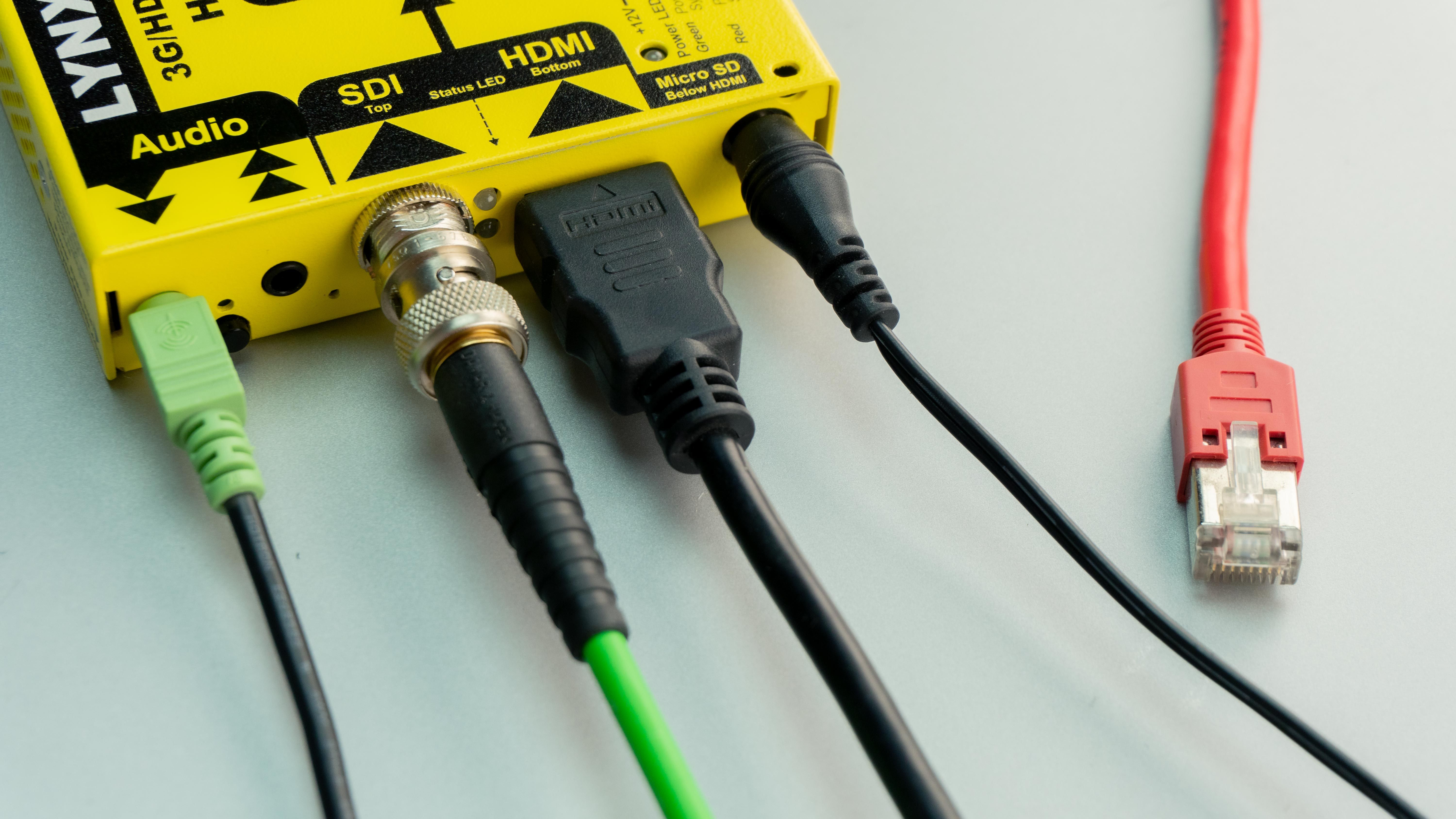
Connector selection is the first step in custom cable design. Professional video workflows may require HDMI, Micro HDMI, Mini HDMI, BNC, SDI, USB-C, LEMO-style connectors, circular connectors, or device-specific connectors.
A reliable custom video cable manufacturer should understand connector compatibility and help buyers confirm:
- Connector type
- Connector gender
- Pin configuration
- Connector housing size
- Straight or right-angle direction
- Locking or non-locking structure
- Frequency of plugging and unplugging
- Risk of port stress
Connector orientation is especially important for camera rigs, monitors, gimbals, and compact AV systems. A right-angle connector may reduce pressure on the device port and make cable routing cleaner.
2. Cable Length Control
Cable length affects both performance and usability. In camera rigs, a cable that is too long creates clutter. In fixed installations, a cable that is too short creates installation stress. In mobile production, excess cable may become a trip risk or tangle during setup.
Custom length helps buyers improve:
- Camera rig cleanliness
- Monitor cable routing
- AV cabinet installation
- DIT cart organization
- Rental kit usability
- Outdoor production setup
- Industrial equipment layout
Instead of forcing the equipment to fit the cable, a custom cable should fit the equipment.
3. Signal Stability and Shielding
Video cables must protect signal integrity. In professional environments, video cables may run near power systems, LED screens, wireless transmitters, audio gear, motors, routers, switchers, and other electronic devices.
Shielding helps reduce interference and improves signal stability. It is especially important for:
- Broadcast video systems
- SDI cable assemblies
- Industrial camera systems
- Live event AV routing
- Long cable runs
- Multi-device production environments
- Video monitoring and recording setups
A professional manufacturer should discuss shielding requirements based on the actual working environment.
4. Jacket Material and Flexibility
Cable jacket material affects handling, durability, and routing. A stiff cable may be acceptable in fixed installations, but it can be a problem in handheld camera setups, gimbal systems, field production, or compact camera rigs.
Flexible cable jackets are useful for:
- Handheld camera rigs
- External monitor setups
- Gimbal systems
- Video transmitters
- Rental kits
- Documentary shooting
- Outdoor production
- Mobile broadcast systems
The best cable design balances flexibility and mechanical strength.
5. Strain Relief and Mechanical Strength
Many cable failures happen near the connector. This area receives repeated bending, pulling, twisting, and packing stress. A custom video cable manufacturer should pay close attention to strain relief design.
Good strain relief helps reduce:
- Broken internal conductors
- Loose connectors
- Cracked cable jacket
- Solder joint stress
- Intermittent signal
- Short service life
For rental houses, live production teams, and outdoor field crews, reinforced strain relief is one of the most important durability features.
Custom Video Cable Types
| Cable Type | Common Use | Best For | Key Requirement |
| Custom SDI / BNC Cable | Broadcast, cinema, live production | Cameras, switchers, monitors | Shielding, connector locking, signal stability |
| Custom HDMI Cable | Camera-to-monitor or recorder | Mirrorless, DSLR, compact cinema rigs | Connector fit, strain relief, short custom length |
| Custom USB-C Video Cable | Modern video/data systems | Capture devices, monitors, compact AV setups | Bandwidth, compatibility, flexibility |
| Custom EVF Cable | Electronic viewfinders | Cinema camera systems | Short length, clean routing, stable connector |
| Custom Monitor Cable | On-camera monitors | Field production and rig setups | Right-angle connector, flexible jacket |
| Industrial Video Cable | Machine vision and inspection | Automation and equipment systems | Shielding, mechanical strength, long-term reliability |
| OEM Video Cable Set | Equipment brands and distributors | Private label accessories | Consistency, packaging, batch control |
How to Choose the Right Custom Video Cable Manufacturer
A good manufacturer should understand how professional video systems are used. Product photos and connector names are not enough. Buyers should ask practical questions before placing an order.
Use this checklist:
- Can the manufacturer customize connector type and orientation?
- Can they support exact cable length requirements?
- Do they understand SDI, HDMI, USB-C, and camera monitor applications?
- Can they recommend suitable shielding for the environment?
- Can they adjust cable flexibility and jacket material?
- Is strain relief reinforced for repeated use?
- Can they support low-volume prototypes before larger orders?
- Can they produce consistent batches for distributors or rental houses?
- Can they help with equipment compatibility questions?
- Do they provide technical communication before production?
A strong custom video cable manufacturer should reduce sourcing risk and help buyers avoid incorrect cable design.
Why Alvin’s Cables Is Suitable for Custom Video Cable Projects
Alvin’s Cables provides professional connectivity solutions for photography, film, broadcast, and industrial applications. The company supports custom cable solutions for power, audio, control, data, and video-related workflows.
For custom video cable projects, Alvin’s Cables can support design details such as connector combinations, connector orientation, pin configuration, cable length, flexibility, shielding, current rating, strain relief, and mechanical strength.
Alvin’s Cables is suitable for:
- Custom video cable manufacturing
- Camera monitor cable customization
- SDI / BNC video cable projects
- HDMI cable assembly development
- Custom EVF cable sourcing
- Broadcast cable solutions
- Rental house cable kits
- OEM accessory cable projects
- Low-volume prototype cable development
- Industrial video cable applications
Buyers can browse standard cable options through the Alvin’s Cables product center. For project-specific cable requirements, visit custom cable solutions.
What Information Should Buyers Provide?
Clear project information helps the manufacturer evaluate feasibility and provide a more accurate quote.
| Information Needed | Why It Matters |
| Device model | Confirms connector and compatibility |
| Signal type | Helps match cable performance |
| Connector type | Determines cable design |
| Connector orientation | Reduces port stress and improves routing |
| Cable length | Affects usability and signal planning |
| Cable environment | Studio, field, outdoor, rental, industrial |
| Shielding requirement | Helps protect signal stability |
| Flexibility requirement | Determines jacket and handling |
| Quantity | Supports prototype, small batch, or bulk planning |
| Packaging requirement | Important for OEM and distributors |
Buyers can submit these details through the request a quote page.
Standard Supplier vs Custom Video Cable Manufacturer
| Factor | Standard Cable Supplier | Custom Video Cable Manufacturer |
| Product approach | Sells existing products | Builds around project needs |
| Connector options | Limited | Custom connector and orientation |
| Cable length | Standard lengths | Exact length possible |
| Application support | Basic | Workflow-based recommendation |
| Prototype support | Often limited | Suitable for testing before scaling |
| Best for | Simple replacement | Camera rigs, OEM, broadcast, industrial |
| Risk control | Depends on SKU fit | Designed to reduce compatibility risk |
For professional buyers, custom manufacturing is more valuable when the setup is complex, repeated, or commercially important.
Cost and Risk Considerations
The cheapest cable is not always the lowest-cost solution. If a video cable fails in production, the hidden cost may be far higher than the cable price.
Possible risks include:
- Signal dropout
- Monitor flickering
- Production delay
- Re-shooting cost
- Rental returns
- Equipment troubleshooting
- Damaged ports
- Customer complaints
- Industrial downtime
- Failed live event output
A reliable custom video cable manufacturer helps reduce these risks through better material selection, connector control, shielding, strain relief, and application-specific design.
Common Application Scenarios
Cinema Camera Rigs
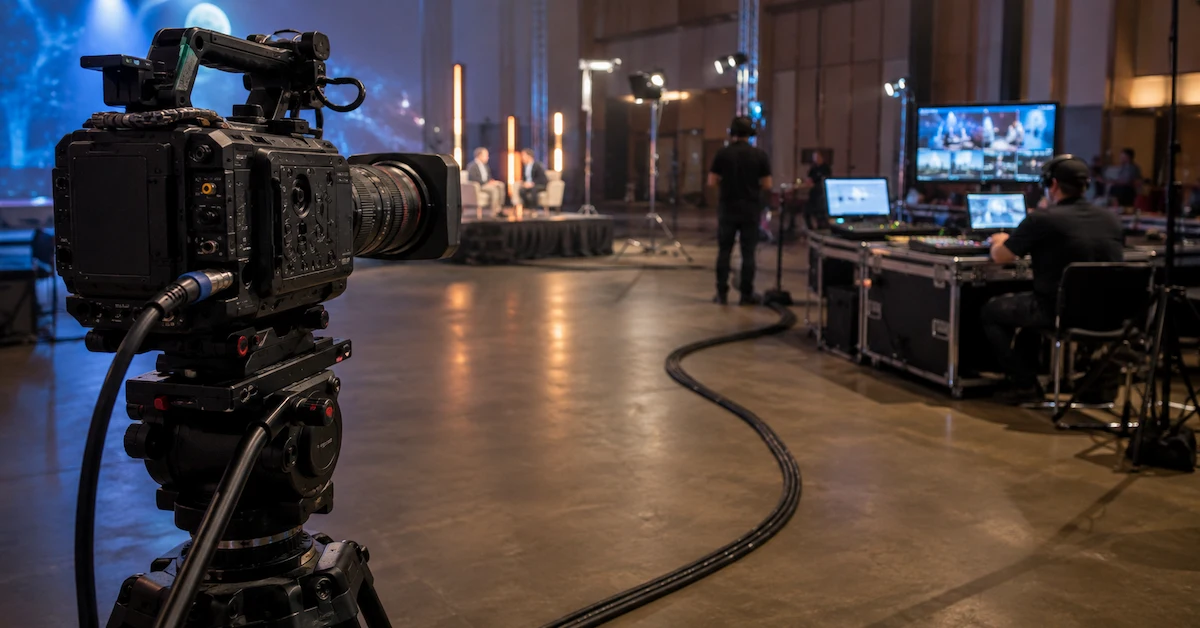
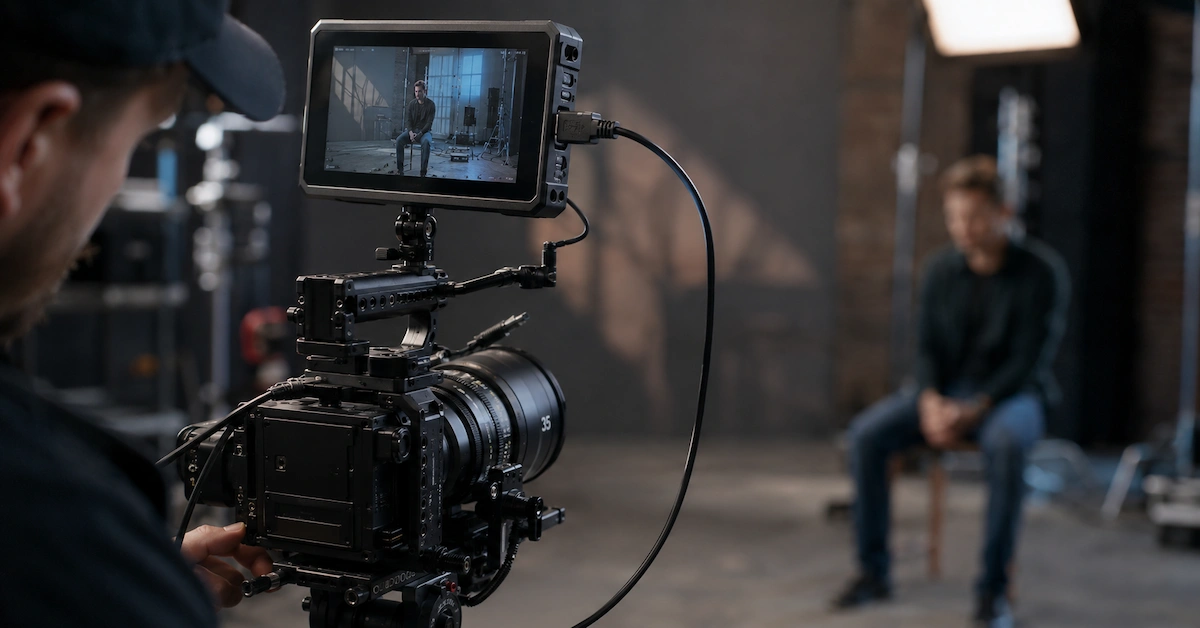
Custom video cables help connect cameras, monitors, recorders, EVFs, and transmitters while keeping the rig clean and balanced.
Broadcast and Live Production
Broadcast systems require stable cables for long operating hours. Custom SDI or BNC cables can support specific routing and signal requirements.
Rental House Cable Kits
Rental houses need durable and repeatable cable sets in multiple lengths. Custom cable manufacturing helps standardize kit quality.
AV Integration Projects
AV integrators need cables that match installation layouts, device distance, cabinet structure, and cable routing plans.
Outdoor Field Production
Outdoor production requires cables with better durability, flexibility, and strain relief to handle movement and rough environments.
Industrial Video Systems
Industrial video applications need stable signal transmission near machinery, power systems, and equipment cabinets. Shielding and mechanical reliability are important.
Internal Links for Buyers
To learn more about Alvin’s Cables’ professional background, visit About Alvin’s Cables. To browse available cable products, visit the product center. For custom connector, length, shielding, strain relief, or routing requirements, visit custom cable solutions. To submit technical requirements and request pricing, use the request a quote page. For prototype, lead time, shipping, and support questions, visit the FAQ page.
FAQ
1. What is a custom video cable manufacturer?
A custom video cable manufacturer designs and produces video cable assemblies based on specific connector, length, signal, shielding, flexibility, and application requirements.
2. What types of custom video cables can be made?
Common types include custom SDI cables, HDMI cables, USB-C video cables, monitor cables, EVF cables, industrial video cables, and OEM video cable sets.
3. Why choose custom cables instead of standard cables?
Custom cables provide better fit for specific equipment layouts, cleaner cable routing, suitable connector orientation, improved durability, and better compatibility.
4. Can connector orientation be customized?
Yes. Connector orientation can often be customized to reduce port stress and improve cable routing around camera cages, monitors, rigs, or equipment cabinets.
5. What information is needed for a custom quote?
Buyers should provide device model, connector type, signal type, cable length, application environment, quantity, and any special shielding or flexibility needs.
6. Can Alvin’s Cables support small batch or prototype projects?
Yes. Alvin’s Cables can support low-volume custom cable projects and prototype development before scaling to larger orders.
7. Are custom video cables suitable for rental houses?
Yes. Rental houses often benefit from custom cable sets because they need durable, repeatable, and easy-to-manage cable kits.
8. Can custom video cables be used outdoors?
Yes, but buyers should define the outdoor conditions clearly. Jacket material, strain relief, connector protection, and shielding may need to be adjusted.
9. What is the typical lead time for custom video cable projects?
Lead time depends on complexity, quantity, and material availability. Buyers should confirm timing during the quotation stage.
10. How do I choose the best custom video cable manufacturer?
Choose a manufacturer that understands professional AV workflows, supports customization, provides technical communication, and can control quality before delivery.
Conclusion
Choosing a custom video cable manufacturer is an important decision for professional AV buyers. The right partner can help improve signal stability, reduce cable clutter, protect equipment ports, support special connector needs, and lower long-term failure risk.
Professional buyers should evaluate connector customization, cable length control, shielding, jacket flexibility, strain relief, quality inspection, prototype support, and application knowledge before placing an order.
Alvin’s Cables supports standard and custom cable solutions for film, broadcast, photography, AV integration, rental kits, OEM projects, and industrial video systems. For custom video cable manufacturing needs, contact Alvin’s Cables to discuss your project requirements.