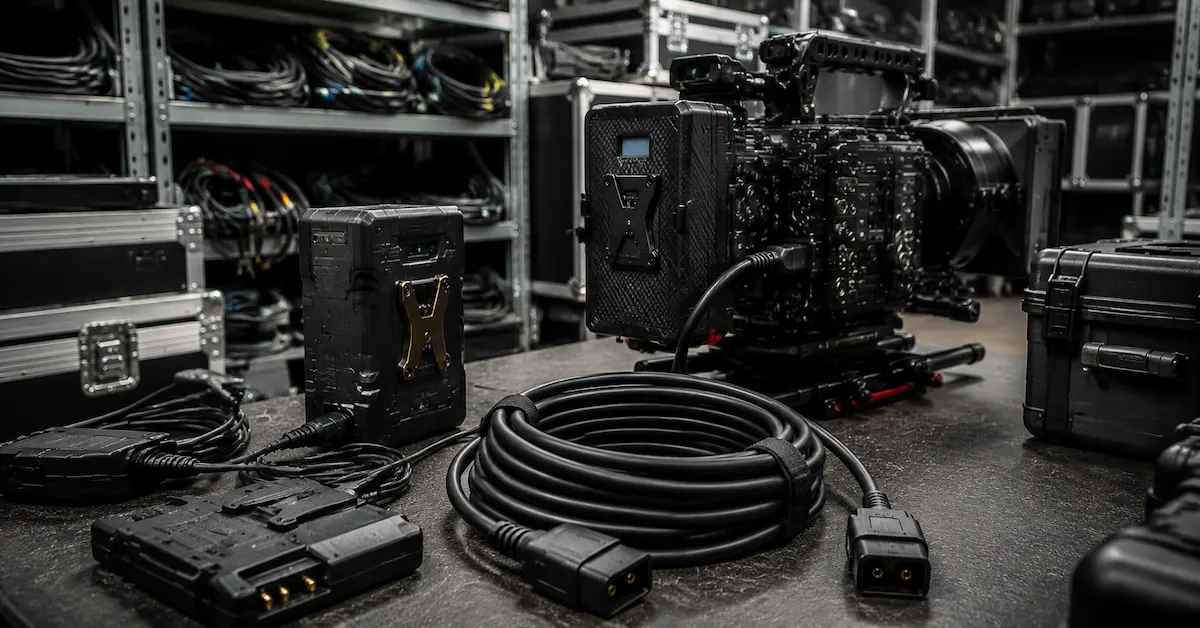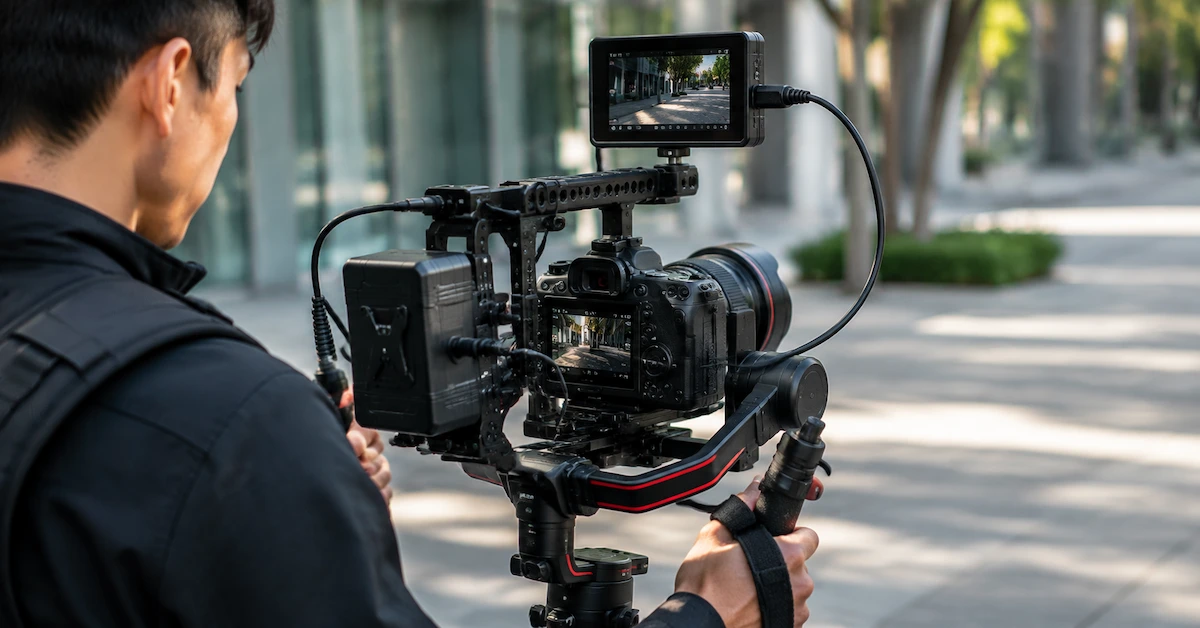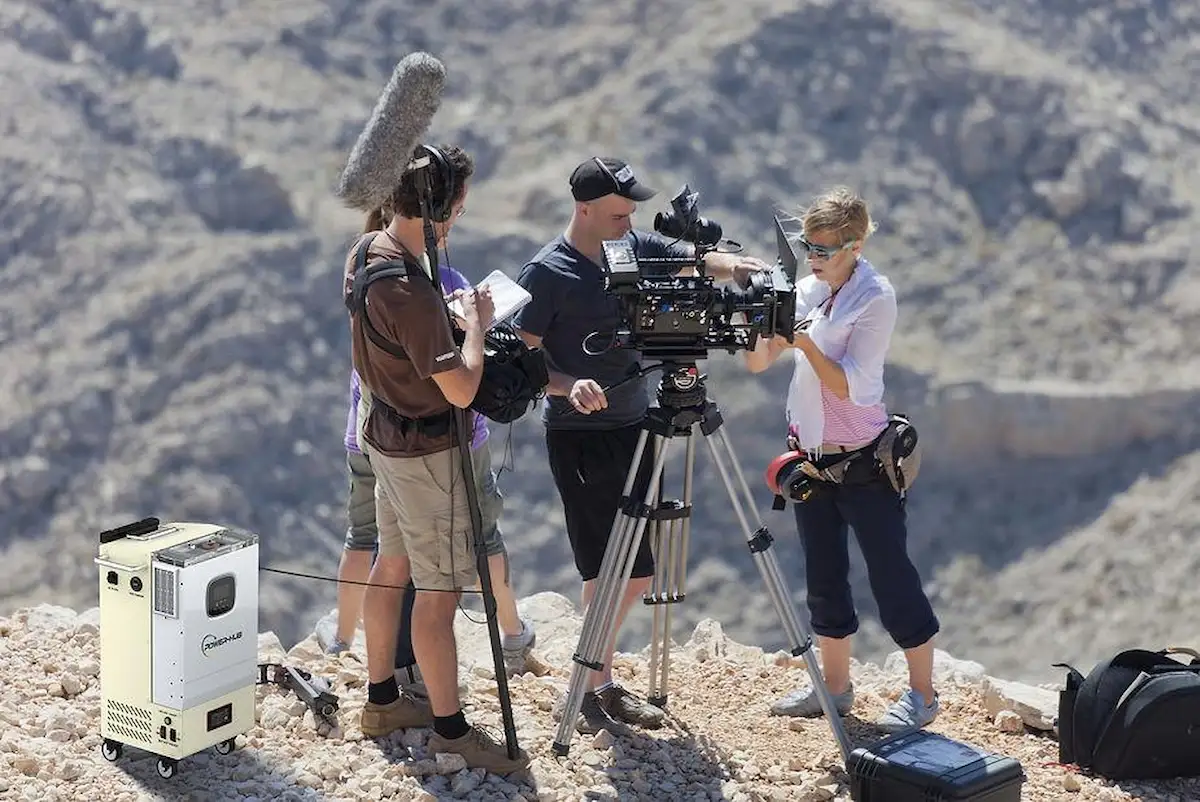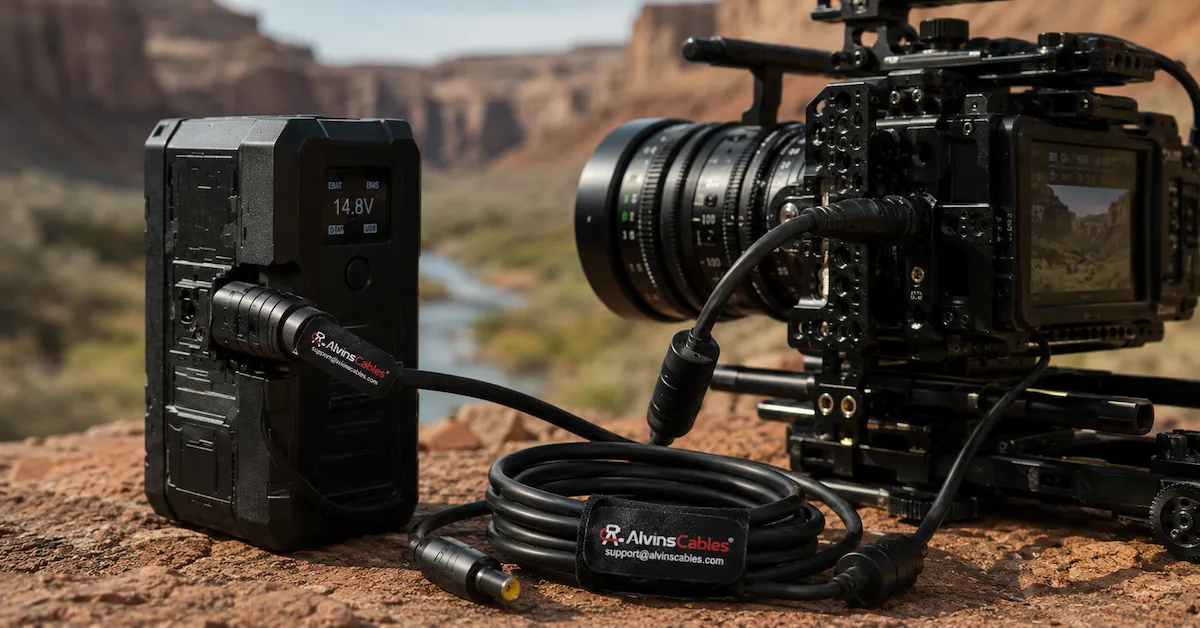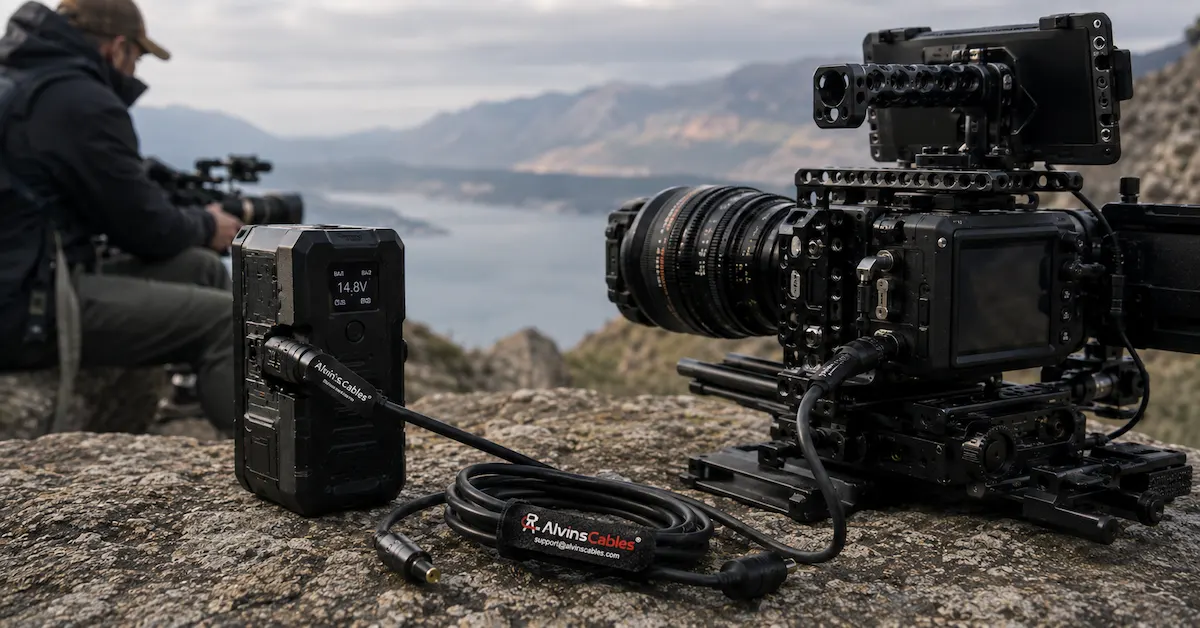
A heavy duty power cable is designed for professional equipment that must operate reliably under higher electrical loads, repeated movement, frequent setup changes, and demanding production conditions.
Cinema cameras, field monitors, wireless transmitters, recorders, focus systems, and other AV accessories often rely on external batteries and power distribution systems. When the power cable is incorrectly specified, the result can include voltage drop, unstable equipment operation, connector overheating, unexpected shutdowns, or premature cable failure.
For production companies, rental houses, equipment brands, distributors, and AV integrators, selecting the right cable is therefore a technical and commercial decision. Buyers must evaluate the complete power system rather than choosing a product based only on connector appearance or price.
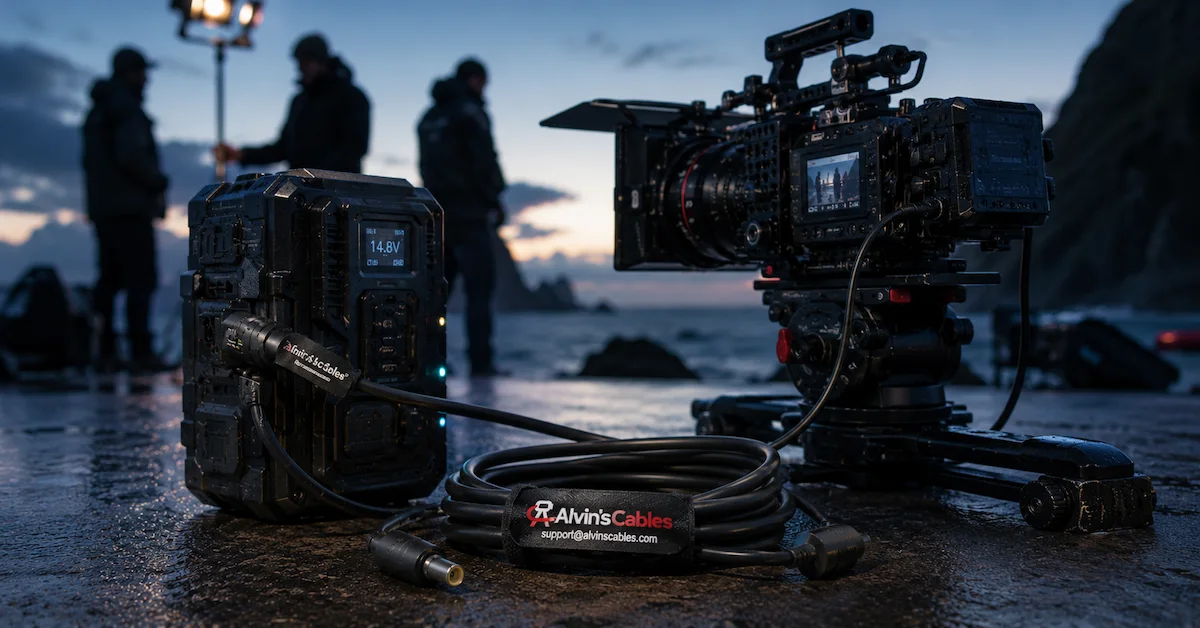
Quick Answer: What Makes a Power Cable Heavy Duty?
A heavy duty power cable combines suitable electrical capacity with reinforced mechanical construction. It should safely carry the required current while remaining reliable during bending, pulling, transportation, and repeated connection cycles.
Important characteristics include:
- Suitable conductor size for the required load
- Stable voltage delivery
- Durable connector housing
- Correct polarity and pin configuration
- Reinforced strain relief
- Flexible but abrasion-resistant cable jacket
- Appropriate cable length
- Secure equipment compatibility
- Consistent assembly and inspection
A thicker-looking cable is not automatically a better cable. The conductor, connector, termination, insulation, and strain relief must all work together.
Who Needs Heavy Duty Power Cable Solutions?
| Buyer Type | Primary Requirement | Typical Application |
|---|---|---|
| Film production companies | Stable power during long shoots | Cinema cameras, monitors and recorders |
| Broadcast teams | Reliable continuous operation | Studio cameras and mobile broadcast systems |
| Rental houses | High repeat-use durability | Camera and accessory power kits |
| Equipment brands | Custom cable integration | OEM camera accessory packages |
| AV integrators | Project-specific power routing | Studios, control rooms and mobile systems |
| Distributors | Consistent product quality | Professional replacement cable inventory |
| Industrial users | Stable equipment power | Imaging and monitoring systems |
These customers usually need more than an off-the-shelf cable. They need clear specification control, repeatable manufacturing quality, and support for special equipment combinations.
Electrical Load Must Be Confirmed Before Cable Selection
The first step is identifying the electrical requirements of the connected equipment.
Buyers should confirm:
- Input voltage
- Normal operating current
- Peak current
- Device power consumption
- Battery or power source output
- Number of connected accessories
- Expected continuous operating time
- Required cable length
A cable designed for a small monitor may not be suitable for a cinema camera or a multi-device power system. Higher current increases the importance of conductor size, connector rating, termination quality, and heat management.
When requesting a custom solution, provide the exact equipment model whenever possible. This allows the supplier to evaluate the full application rather than relying on a connector description alone.
Conductor Design and Voltage Drop
Electrical resistance increases with cable length and decreases as conductor cross-sectional area increases. In practical terms, a cable that is too thin or unnecessarily long may create voltage drop and heat during operation.
For professional camera systems, voltage drop may lead to:
- Equipment restarting unexpectedly
- Battery warnings
- Unstable monitor operation
- Wireless transmitter shutdown
- Reduced usable battery runtime
- Connector or cable heating
A properly designed heavy duty power cable should balance conductor capacity, cable diameter, flexibility, and installation requirements.
Buyers should not automatically request the thickest possible cable. An oversized cable may become too stiff for camera rig use. The goal is to select a cable structure that safely supports the load while remaining practical to route.
Connector Compatibility and Orientation
Professional power cables may use several connector systems:
- D-Tap
- DC barrel
- 2-pin locking connectors
- 4-pin XLR
- LEMO-style connectors
- USB-C power connectors
- Dummy battery connectors
- Device-specific camera connectors
Before production, buyers should confirm:
- Power-source connector
- Device-side connector
- Connector gender
- Polarity or pin configuration
- Voltage and current requirement
- Straight or right-angle orientation
- Locking requirement
- Available space around the equipment port
Connector orientation is especially important on compact camera rigs. A poorly positioned connector can block nearby interfaces, interfere with accessories, or place unnecessary force on the equipment port.
A custom right-angle design may improve routing and reduce mechanical stress.
Jacket Strength Without Excessive Stiffness
Heavy duty does not mean rigid. A cable used on a moving camera rig must remain flexible enough to route around batteries, cages, monitors, transmitters, and handles.
The jacket should provide a practical balance between:
- Flexibility
- Abrasion resistance
- Bend resistance
- Surface protection
- Temperature performance
- Handling comfort
- Repeated-use durability
Fixed studio installations may accept a less flexible cable. Handheld rigs, documentary production, mobile broadcast systems, and rental kits usually benefit from a softer structure.
The application environment should therefore be explained before the cable material is selected.
Why Strain Relief Is Critical
The transition between the cable and connector is one of the most common failure areas. Repeated bending concentrates mechanical stress at this point.
Effective strain relief helps protect:
- Internal conductors
- Solder joints
- Connector terminals
- Cable insulation
- Equipment ports
Rental houses should pay particular attention to this area because their cables are handled by different operators and may be packed, pulled, coiled, and reinstalled frequently.
A low-cost cable with weak strain relief may require repeated replacement, making its total ownership cost higher than a properly constructed cable.
Standard vs Heavy Duty Power Cable
| Factor | Standard Power Cable | Heavy Duty Power Cable |
| Typical application | Light or occasional use | Professional repeated-use environments |
| Electrical capacity | Basic equipment loads | Selected for demanding equipment loads |
| Connector construction | General-purpose | Reinforced and application matched |
| Strain relief | Standard | Designed for repeated bending and pulling |
| Jacket design | General handling | Improved durability and wear resistance |
| Length options | Fixed standard lengths | Standard or project-specific lengths |
| Best suited for | Simple equipment setups | Camera rigs, rental kits and AV systems |
A standard product may be sufficient for a stationary monitor. A professional camera rig that operates outdoors, travels frequently, or powers high-demand equipment may require a more robust solution.
Common Applications
Cinema Camera Rigs
A cinema camera rig may combine a camera body, monitor, recorder, wireless transmitter, focus system, and battery plate. The cable must deliver stable power without creating excessive bulk or interfering with operation.
Broadcast and Studio Systems
Broadcast equipment often operates for extended periods. Consistent power delivery and secure connectors are essential for reducing interruptions.
Rental Equipment Kits
Rental cables must handle frequent transportation, connection, and storage. Reinforced construction helps reduce maintenance and replacement frequency.
Outdoor and Field Production
Field production adds movement, dust, rough surfaces, temperature changes, and unpredictable handling. Durable materials and secure connectors become more important.
Mobile AV Systems
Mobile systems require cables that are strong enough for repeated installation but flexible enough for fast routing and removal.
When Should Buyers Request a Custom Cable?
A custom heavy duty power cable is recommended when:
- Standard cable lengths create excessive clutter
- The equipment uses an uncommon connector combination
- A right-angle connector is required
- The cable must carry a specific current load
- The rig has limited installation space
- A softer or more durable jacket is needed
- The cable will be included in an OEM accessory kit
- A rental company needs repeatable cable specifications
- Standard products cannot match the application environment
Custom development can also reduce the number of adapters in the system. Fewer connection points may improve reliability and simplify equipment management.
Why Work with Alvin’s Cables?
Alvin’s Cables provides professional cable solutions for photography, film, broadcast, AV, and industrial applications.
For heavy duty power cable projects, Alvin’s Cables can support:
- Camera power cable development
- D-Tap and V-Mount cable solutions
- DC and XLR connector combinations
- Custom cable lengths
- Straight and right-angle connectors
- Flexible cable structures
- Reinforced strain relief
- Prototype and low-volume projects
- OEM and repeat-production orders
Buyers can review standard options in the Alvin’s Cables product center.
For special connector, current, cable length, routing, or durability requirements, submit the project through custom cable solutions.
What Information Is Needed for a Quote?
| Required Information | Why It Matters |
| Power source or battery model | Confirms output compatibility |
| Connected device model | Identifies input and load requirements |
| Voltage and current | Determines conductor and connector needs |
| Connector at both ends | Defines the cable assembly |
| Required cable length | Supports routing and voltage-drop evaluation |
| Connector orientation | Prevents installation conflicts |
| Application environment | Guides material and durability selection |
| Order quantity | Supports prototype and production planning |
| Packaging requirement | Important for OEM and distributor orders |
Providing clear information reduces engineering revisions and helps the supplier prepare a more accurate quotation.
Buyers can submit these details through the request a quote page.
Cost and Procurement Risk
The lowest unit price does not always produce the lowest total cost.
A poorly selected cable can create:
- Equipment downtime
- Replacement purchases
- Rental returns
- Customer complaints
- On-set troubleshooting
- Damaged equipment ports
- Shipping and after-sales expenses
Professional buyers should compare electrical suitability, connector construction, cable durability, quality consistency, and supplier communication—not only price.
A short prototype order can help verify fit, routing, polarity, and operating performance before larger-scale purchasing.
FAQ
What is a heavy duty power cable?
It is a reinforced power cable designed to provide stable electrical performance and improved mechanical durability in demanding professional applications.
Is a heavy duty cable always thicker?
Not necessarily. Cable diameter depends on conductor requirements, insulation, jacket structure, flexibility, and application design. A suitable cable should be engineered for the actual load.
Can the connector and cable length be customized?
Yes. Connector type, orientation, cable length, polarity, conductor structure, and strain relief can be customized according to the equipment.
What information is required to confirm current capacity?
Provide the device model, voltage, normal current, peak current, power source, cable length, and expected working conditions.
Are heavy duty cables suitable for rental houses?
Yes. Rental houses benefit from reinforced connectors, strain relief, repeatable specifications, and durable jackets because cables are handled frequently.
Can Alvin’s Cables support a prototype before bulk production?
Custom projects can begin with requirement evaluation and prototype development before moving to repeat or bulk production.
Conclusion
A heavy duty power cable must provide both electrical stability and mechanical reliability. Buyers should evaluate current capacity, conductor design, voltage drop, connector compatibility, cable length, jacket flexibility, strain relief, and application conditions before ordering.
For camera rigs, broadcast systems, rental kits, field production, and professional AV equipment, a project-specific cable can improve reliability while reducing clutter, maintenance, and replacement costs.
Contact Alvin’s Cables through the request a quote page with your equipment model, connector combination, electrical load, required length, and quantity to receive a suitable heavy duty power cable solution.