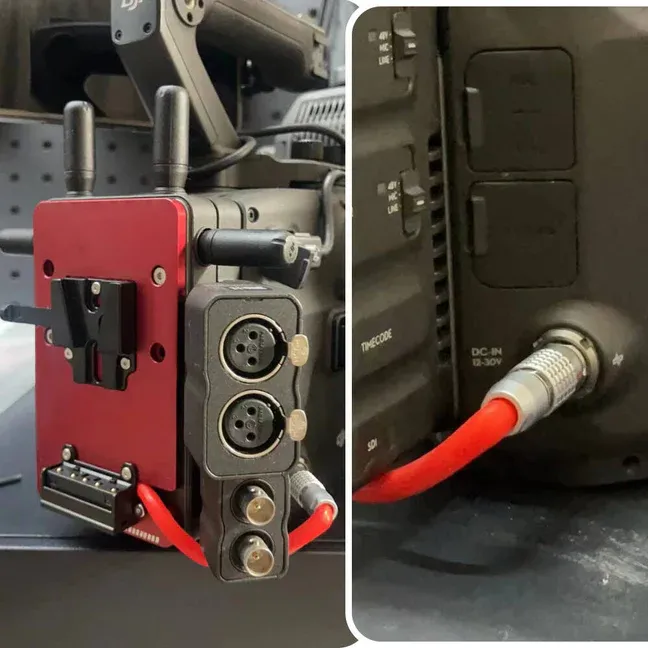
System Instability Often Starts Before Installation
In many projects, problems do not appear during design—they emerge during operation.
A system may pass initial testing, yet after hours of continuous use, subtle inconsistencies begin to show. Signal clarity fluctuates. Power delivery becomes uneven. Connections that felt secure start behaving unpredictably under movement or load.
These are not isolated defects. They are the result of upstream manufacturing decisions.
A professional cable manufacturer is not simply producing components—they are defining how stable a system can remain over time. At Alvins, we approach cable production by analyzing how materials, structure, and assembly will behave under real conditions, not just under test scenarios.
Material Systems and Structural Design Define the Performance Ceiling
Before a cable is manufactured, its performance limits are already set by material selection and internal structure.
Each layer contributes directly to system behavior:
- Conductors
Oxygen-free copper (≈101% IACS) ensures efficient current flow and reduces heat buildup - Shielding Architecture
Braided + foil shielding structures can reduce electromagnetic interference by up to 60% - Insulation Materials
TPU improves abrasion resistance by ~50% compared to standard PVC
TPE enhances flexibility in dynamic environments - Connector Interfaces
Gold-plated contacts reduce oxidation and lower resistance by 20–30%
According to the International Electrotechnical Commission, consistent material properties are essential to maintaining electrical and mechanical reliability in cable systems.
Reference: https://www.iec.ch/
These parameters are not optional upgrades—they define the ceiling of performance a cable can reach.
Manufacturing Experience Shapes Consistency Across Every Batch
Once materials are defined, manufacturing execution becomes the determining factor.
Different cable manufacturers may use similar materials but achieve very different results due to process control.
At Alvins, production focuses on repeatability:
- Controlled conductor preparation to maintain uniform resistance
- Precision crimping and soldering to stabilize contact integrity
- Standardized shielding termination to preserve EMI performance
- Structured quality checkpoints throughout production
This level of consistency ensures that performance does not vary between batches—an issue that often causes instability in large-scale deployments.
Process Control Is What Translates Design into Real Performance
Moving from design to production introduces variability, and this is where process discipline becomes critical.
Key manufacturing stages include:
Conductor Preparation
Even minor deviations in stripping or handling can affect conductivity.
Termination (Crimping / Soldering)
Controlled parameters ensure stable electrical connections and reduce resistance fluctuations.
Shield Integration
Improper grounding or termination reduces shielding effectiveness significantly.
Connector Assembly
Alignment precision directly affects connection reliability under repeated use.
Final Testing
Electrical and mechanical validation ensures performance before delivery.
Industry research from IPC indicates that structured manufacturing processes can reduce cable-related defects by over 50%.
Reference: https://www.ipc.org/
Quantifiable Differences in Field Performance
To understand the impact of manufacturing quality, it is useful to compare real-world outcomes:
| Parameter | Basic Manufacturing | Controlled Manufacturing | Improvement |
|---|---|---|---|
| Signal Stability | Medium | High | +35–50% |
| EMI Resistance | Moderate | Strong | +40–60% |
| Connector Reliability | Variable | Consistent | ↓ failure by ~70% |
| Lifespan | 6–12 months | 18–36 months | 2–3× |
| Batch Consistency | Low | High | Significant |
These differences become more pronounced in high-load or high-frequency environments.
Case Example: Improving Reliability in a Mixed Equipment System
A client working with a hybrid system of different equipment brands experienced recurring instability.
The issues were not immediately obvious:
- Occasional signal degradation
- Inconsistent power delivery
- Increased setup time due to unpredictable behavior
After evaluation, the underlying issue was traced back to inconsistent cable manufacturing:
- Variations in shielding quality
- Inconsistent connector tolerances
- Lack of standardized production processes
The solution involved switching to a cable manufacturer with controlled production methods:
- Unified material specifications
- Standardized assembly parameters
- Introduced full testing before delivery
The outcome:
- System stability improved by ~40%
- Setup efficiency increased by 30%
- Maintenance frequency significantly reduced
This case highlights how manufacturing quality directly influences operational performance.
Procurement Considerations Beyond Price and Lead Time
From a sourcing perspective, evaluating a cable manufacturer requires looking beyond surface metrics.
Key considerations include:
- Whether the manufacturer understands application-specific requirements
- Transparency in material and process specifications
- Consistency across production batches
- Ability to support customization without compromising quality
Buyers who focus on these factors typically reduce long-term operational costs, even if initial unit pricing is slightly higher.
Closing Perspective: Manufacturing Quality Defines System Reliability
Cables sit at the intersection of every system.
They carry signals, deliver power, and connect components—but more importantly, they determine how consistently a system performs under real conditions.
A reliable cable manufacturer ensures that:
- Material properties are consistent
- Manufacturing processes are controlled
- Final products perform as expected over time
At Alvins, we treat cable manufacturing as an engineering-driven process, where design intent is preserved through disciplined production and validation.
If your system requires stability beyond initial setup, the choice of manufacturer becomes a defining factor.
Explore our capabilities here: https://www.alvins.com/
Or discuss your project requirements directly:
https://www.alvins.com/request-a-quote